


ChatGPT can help you plan a Vietnam trip by building an itinerary around your dates, interests and travel pace. However, it can suggest unrealistic routes or provide outdated information about weather, transport, prices and local rules. This guide covers the pros and cons of using ChatGPT to plan a Vietnam trip, how to get better results, verify important details and use it during your trip.
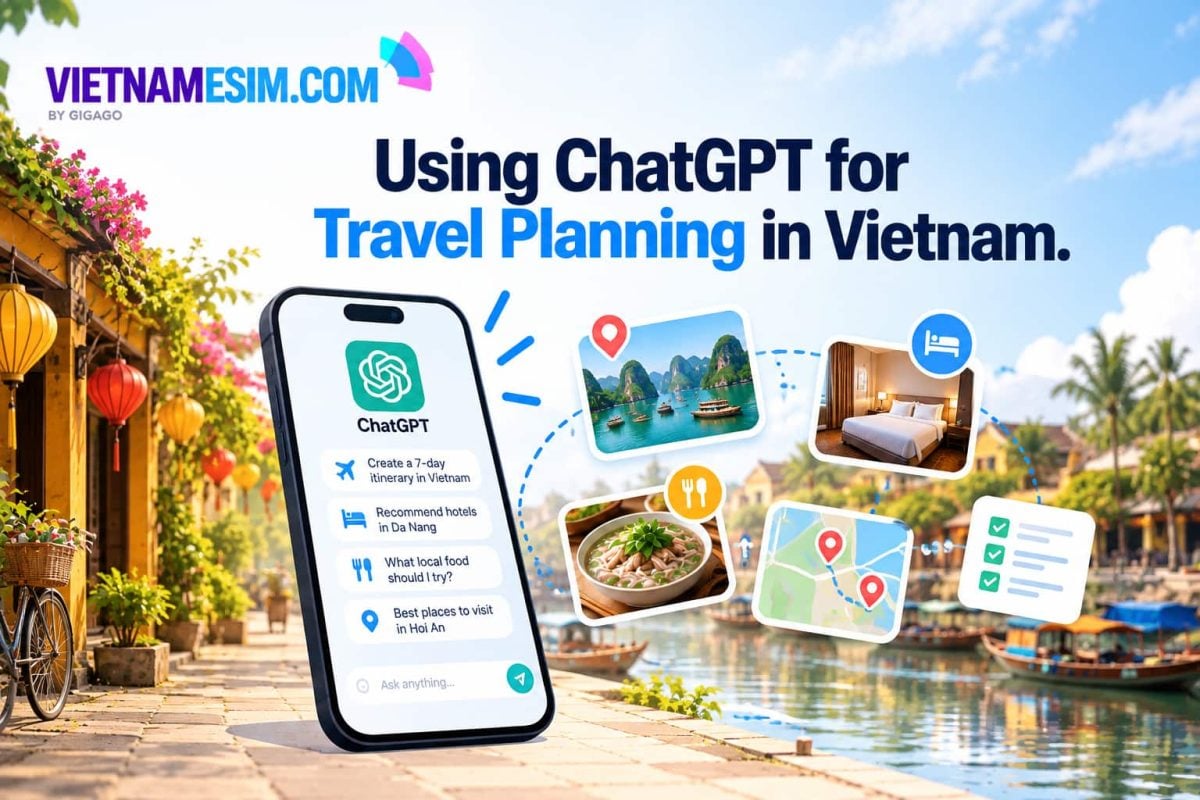
Can ChatGPT Help You Plan a Trip to Vietnam?
Yes. ChatGPT can help you build a Vietnam itinerary, compare destinations and adjust your plans to fit your budget and travel style. However, it can underestimate travel times, overlook regional weather differences or provide outdated information about prices, schedules and entry rules.
The best approach is to use ChatGPT to organize your trip and explore options, then verify important details before booking.
Do You Need a VPN to Use ChatGPT in Vietnam?
No, you generally don’t need a VPN to use ChatGPT in Vietnam. However, access can depend on your internet connection and travel eSIM provider.
Some international travel eSIMs may route data through other countries or have restrictions that affect access to certain apps and AI services. If you plan to use ChatGPT during your trip, check with your eSIM provider that the specific plan supports access to ChatGPT on your device.
A VPN may help in some network situations, but it isn’t guaranteed to solve connection issues. For more details, see our guide to VPNs in Vietnam explains when a VPN is actually worth using.
Consider buying a Vietnam eSIM on Vietnamesim.com? You can use ChatGPT while traveling in Vietnam without needing a separate VPN, so you can plan your days, translate text and get travel tips on the go.
What Are the Pros and Cons of Using ChatGPT to Plan a Vietnam Trip?
ChatGPT is useful for building a Vietnam itinerary, comparing destinations and adjusting plans to your travel style. Its main weakness is that it can suggest unrealistic routes or outdated details, so use it to plan your trip, not as the final authority on travel information.
What ChatGPT does well
1. Builds a personalized itinerary
ChatGPT can turn your travel dates, budget, interests and preferred pace into a day-by-day Vietnam itinerary.
- Example: Ask it to plan a 14-day trip from Hanoi to Ho Chi Minh City, focusing on local food, walking and fewer crowded attractions.
- Best use: Give it your arrival and departure cities, travel dates, budget, interests and anything you want to avoid.
2. Compares destinations and routes
ChatGPT can compare destinations based on your interests and help you decide how to divide your time between regions.
- Example: Ask whether Ha Giang or Sa Pa is a better fit for a first-time visitor who doesn’t ride a motorbike, or whether to spend more time in northern or central Vietnam.
- Best use: Ask for the pros and cons of each option, including travel time, activities and seasonal considerations.
3. Refines plans when your circumstances change
You can revise an existing itinerary in the same chat without rebuilding the entire plan.
- Example: If your flight arrives in Hanoi at 10 p.m., ask ChatGPT to adjust the first day. You can also ask it to remove a stop, add a night in Hue or suggest rainy-day alternatives.
- Best use: Make one change at a time and ask ChatGPT to explain how it affects the rest of your route.
4. Organizes travel research
ChatGPT can turn notes from guidebooks, travel blogs and travel groups into a more manageable itinerary. With web search enabled, it can also find relevant online sources for information that may have changed.
- Example: Paste a list of places you want to visit and ask ChatGPT to group them by location, suggest an order and identify details that still need verification.
- Best use: Treat its recommendations and links as starting points, then open the original sources to confirm the information.
What does ChatGPT often get wrong about Vietnam?
1. It can create itineraries that are too ambitious
ChatGPT may fit too many destinations into a short trip without accounting for the time lost to transfers, traffic and check-ins.
- Example: A three-week itinerary covering Hanoi, Ninh Binh, a Ha Long Bay cruise, Hue, Hoi An, Da Lat and Ho Chi Minh City involves several substantial journeys.
- What to do: Ask it to calculate travel time between stops, identify rushed days and recommend which destinations to remove. Confirm actual journey times with transport operators.
2. Its seasonal advice can overlook regional differences
Vietnam’s weather varies significantly between the north, central coast and south. A month that’s suitable for one region may bring cold weather or heavy rain in another.
- Example: Hue’s wet season generally runs from September to December, while northern Vietnam can be cold from December to March.
- What to do: Ask for weather considerations by region, then check a current forecast for your actual travel dates. Our guide to the best time to visit Vietnam explains the regional differences.
3. It can give outdated information about events and local attractions
Opening arrangements, transport services, festivals and access restrictions can change after the information available to ChatGPT was published.
- Example: Hanoi’s Train Street has experienced changing access arrangements, while public events in Ho Chi Minh City can differ from one year to the next.
- What to do: Check current announcements from official authorities, attraction websites or reliable local sources before building your itinerary around a specific place or event.
4. It can get visa rules, prices and schedules wrong
ChatGPT may present an outdated fare, an incorrect holiday date or a visa rule that doesn’t apply to your passport.
- Example: Vietnam’s visa-free entry periods depend on nationality and applicable rules. A general answer about visa exemption may not cover your specific passport or travel dates.
- What to do: Verify entry requirements through official Vietnamese immigration sources. Check train fares with Vietnam Railways, flight details with the airline and prices with the relevant service provider.
How to Get a Better Vietnam Itinerary from ChatGPT
The quality of your Vietnam itinerary depends on how clearly you describe your trip. Use this simple prompt formula to get a more realistic plan.
Use This Prompt Formula
Include six elements: trip details + budget + travel style + preferences and restrictions + itinerary requirements + reality checks.
Example: Planning a 14-Day Trip to Vietnam
Plan a 14-day trip to Vietnam for two adults in mid-March. We fly into Hanoi and out of Ho Chi Minh City. We prefer a relaxed pace, local food and walking, and want to avoid crowded attractions and overnight buses. Our budget is mid-range. Create a day-by-day itinerary, estimate travel time between destinations, flag any potentially rushed days and identify information that needs to be checked against current sources
Refine the First Draft
Don’t treat the first itinerary as final. Ask ChatGPT to adjust the pace, suggest rainy-day alternatives or compare destinations. Before booking, verify transport schedules, prices, opening hours and entry requirements using reliable, up-to-date sources.
How Do You Double-Check ChatGPT’s Vietnam Travel Plan?
You should verify anything that could affect your budget, schedule or safety. ChatGPT’s answers and links can be outdated or incorrect, so open the original source and make sure it supports the information provided.
| What to check | Where to verify it |
|---|---|
| Visa and entry rules | Vietnam’s official e-visa information and the government portal |
| Train times and fares | Vietnam Railways |
| Flight schedules | The airline’s official website or app |
| Road travel times | A map app with current traffic information |
| Taxi and ride-hailing fares | Check the fare in your chosen app. Compare options with our guide to Grab, Xanh SM and Be in Vietnam. |
| Weather during your trip | A current forecast, checked again a few days before departure |
| Tours, cruises and opening hours | The operator’s or venue’s official website, plus recent reviews |
For practical, on-the-ground advice, check recent posts in Vietnam travel Facebook groups or Reddit communities. Travelers may share firsthand tips on local transport, road conditions, tour operators and places to visit.
Look for recent experiences from multiple people, and verify important details with official sources or service providers, as advice from other travelers can also be outdated or subjective.
How Can ChatGPT Help Once You’re in Vietnam?
Once you’re in Vietnam, ChatGPT can help translate menus and signs, write Vietnamese messages, suggest nearby places and answer questions as you travel.
However, it can misunderstand local context, give inaccurate translations or agree with an incorrect assumption. Use it as a travel assistant, not your only source of information.
What ChatGPT can help you do
- Translate menus and signs. Upload a photo for a translation or ask ChatGPT to write a Vietnamese question about food allergies. Confirm allergy information with restaurant staff.
- Write messages in Vietnamese. Ask for a short, polite message for a driver or hotel staff, with the English meaning included.
- Find nearby places. Get suggestions for cafés, restaurants and attractions based on your interests, but check current opening hours and locations.
- Translate conversations by voice. Voice mode can help with spoken communication, though accuracy varies. For important details, use a written message you can review.
What should you be careful about?
- ChatGPT may agree with you even when you’re wrong. AI assistants can reinforce your assumptions instead of questioning them. For example, asking “This restaurant is definitely open tonight, right?” may lead to an overly confident answer. Instead, you should ask neutral questions, request current sources and encourage ChatGPT to challenge your assumptions. Still, verify important information independently, especially for health concerns such as allergies or medication.
- Protect your personal information. Avoid sharing passport numbers, payment details, passwords or security codes. Review OpenAI’s Data Controls if you’re concerned about how your chats are used.
What Do You Need to Use ChatGPT on the Go in Vietnam?
1. A mobile data connection
You need mobile data or Wi-Fi to use ChatGPT while traveling. Installing a Vietnam eSIM before departure lets you access text, photo and voice features once your phone connects after landing.
2. A travel data plan that suits your needs
Choose a plan based on how you use your phone, how much data you expect to need and whether you’ll travel beyond Vietnam. OpenAI doesn’t publish one data-usage figure covering text, web searches, photo uploads and voice chats, so consider a plan with extra data if you expect to use ChatGPT frequently away from Wi-Fi.
- For phone use: The Vietnam Unlimited eSIM is a simple option, but it doesn’t support hotspot sharing.
- For phone and laptop use: The Vietnam Data Only eSIM uses Viettel or Skyfi (on MobiFone’s network), offers 4G/5G speeds and supports hotspot sharing.
- For multi-country trips: The Thailand, Cambodia and Vietnam eSIM covers all three countries on one plan.
See our Vietnam eSIM guide to compare options and learn when to install your Vietnam eSIM before departure.
3. Offline access for areas with weak signal
Mobile coverage can drop in remote areas, including parts of the Ha Giang Loop. Before setting off, save screenshots of your itinerary, booking confirmations and Vietnamese addresses, and download offline maps. See our Ha Giang Loop connectivity guide for more details.
Frequently Asked Questions
Is ChatGPT free to use in Vietnam?
ChatGPT has a free plan in Vietnam with text chats, web search, photo uploads and voice chats within usage limits. Paid plans, including ChatGPT Go and Plus, are also available in Vietnam and offer higher limits or additional features, depending on the plan. Check OpenAI’s current pricing and plan details for the latest information.
Can ChatGPT book hotels, flights or restaurants in Vietnam for you?
ChatGPT can’t reliably book your Vietnam trip for you. It can help research options and prepare travel plans, but you shouldn’t assume it can complete every booking. Restaurant reservations depend on supported partners and location. Some plans and features may help you find flights or prepare a booking, but availability varies. Always confirm the final details on the airline’s, hotel’s or restaurant’s own booking page.
Is ChatGPT better than a travel agent or a local guide?
ChatGPT and a local guide do different jobs. ChatGPT is quick for a first draft and answers questions at any hour, while a local guide or agent knows current road conditions, closures and places that rarely appear online. A practical approach is to shape the plan with ChatGPT, then ask locals or a travel group to sanity-check it.